Search Results for: location

Search Results for: "location"

45 museums found

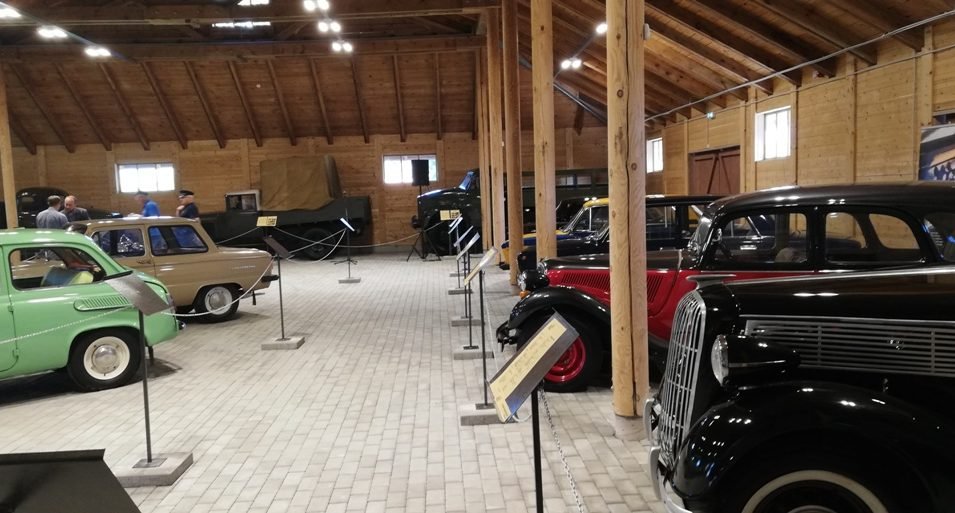
Historical Technology Museum, Anykščiai
View Museum
Automobile Others

Historical Technology Museum, Anykščiai

Anykščiai, Lithuania
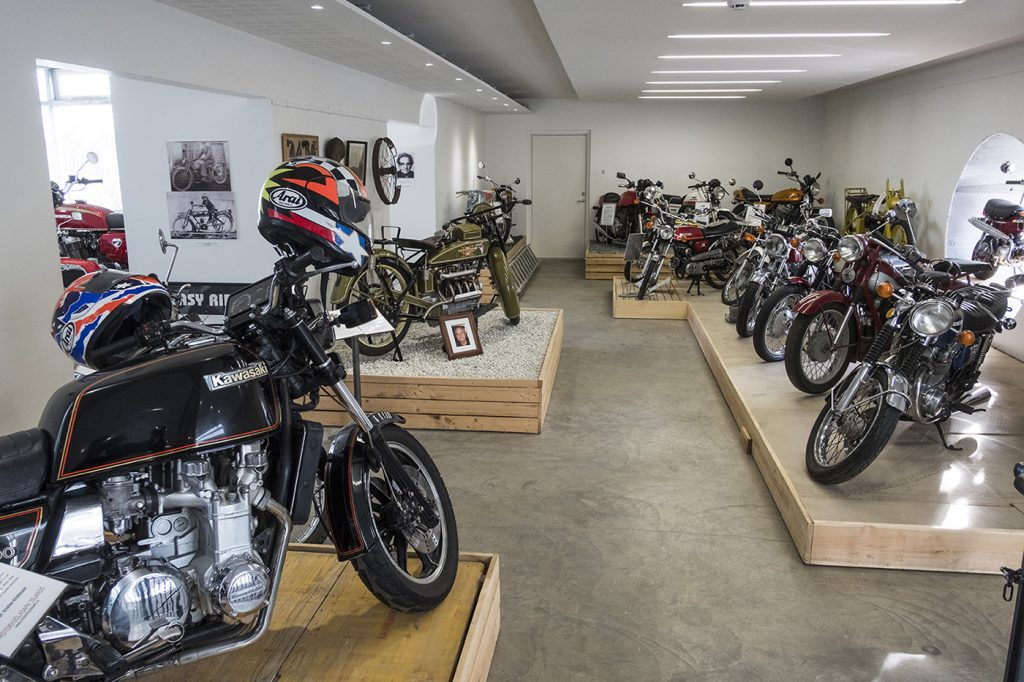
Motorcycle Museum of Iceland
View Museum
Automobilia Motorcycle Others

Motorcycle Museum of Iceland

Akureyri, Iceland
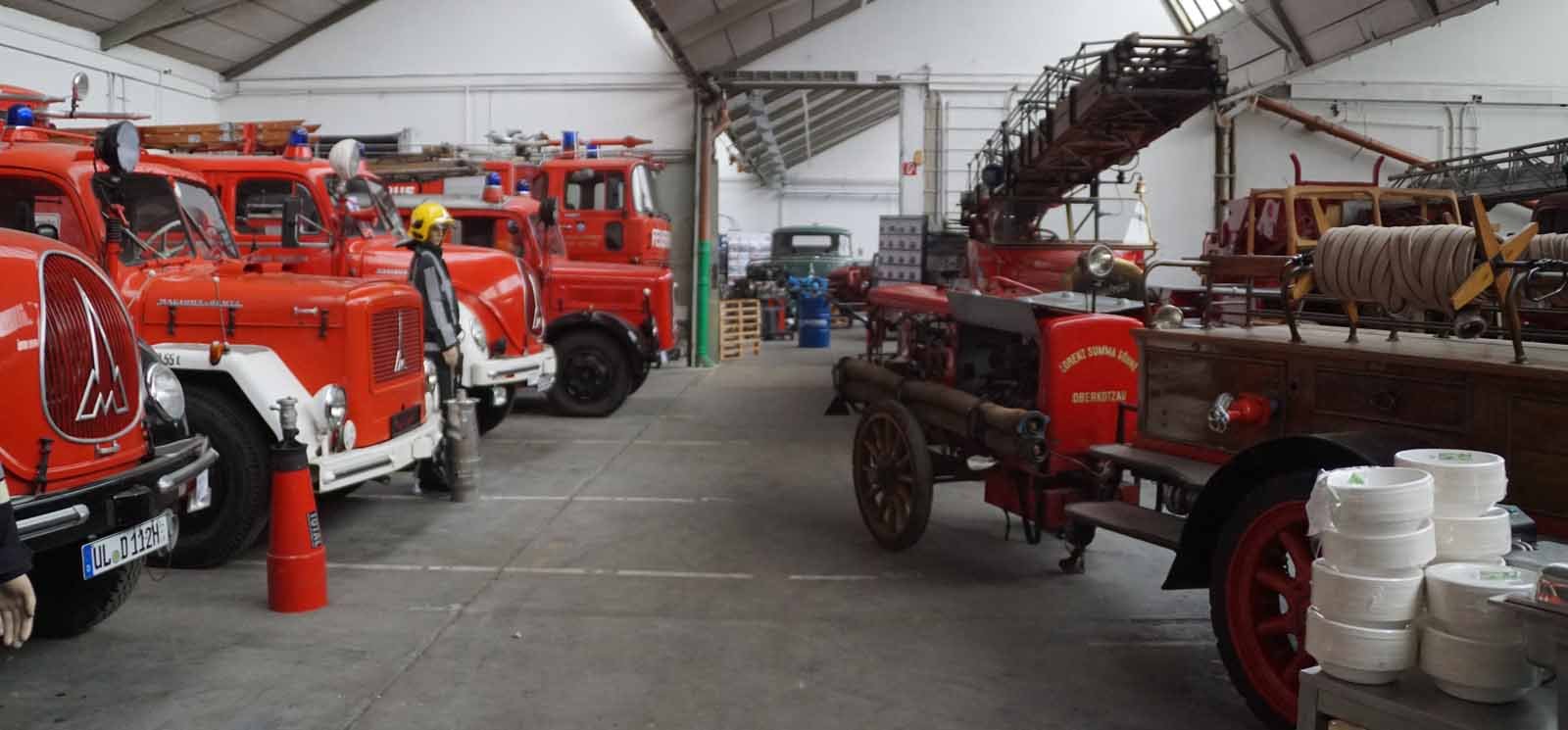
Magirus Iveco Museum
View Museum
Automobilia Commercial Vehicles Fire Engines

Magirus Iveco Museum

Neu-Ulm, Germany

Search Results for: location

SILVERSTONE, United Kingdom, 20 July — The Silverstone Experience reopened its doors on 20 July, giving motorsport fans the chance to get their racing fix after months of lockdown. Visitors can now get close to cars and bikes from seven decades of motorsport history and experience the Ultimate Lap – an immersive cinema show.

The museum team has worked hard during lockdown to prepare for a safe and fun experience for all visitors and has achieved the Visit England consumer mark ‘We’re Good to Go’. Built in a restored WW2 RAF hangar, The Silverstone Experience is a huge indoor space allowing for easy social distancing and timed entry tickets will be limited each day.

Visitors are encouraged to use stylus pens to operate touchscreen interactives, and hand sanitiser stations have been set up around the exhibition. With a strong focus on Science, Technology, Engineering and Maths (STEM) the family-friendly interactive museum is perfect for a family day out, and is located in rural Northamptonshire with ample free parking.

“We are really excited to be re-opening as the summer holidays begin,” says Sally Reynolds, CEO of The Silverstone Experience. “It was only a week after Lewis Hamilton and The Duke of Sussex officially opened our museum in March that lockdown began. We have worked tirelessly to ensure all our visitors can enjoy a safe and exciting visit, as our Visit England ‘We’re Good to Go’ award shows.

“We know that lots of families will be looking for an exciting day out away from the crowds and with our rural location, huge indoor space and limited daily visitors, we are the perfect choice. With our amazing interactives and brilliant collection of motorsport artefacts – from a car that competed in the first Formula 1 race 70 years ago, to the helmet Lewis Hamilton won his sixth world title with last year – we know that racing fans who are missing the action will have a fantastic day out, too.”

From 20 July, the museum will be open daily from 10:00 – 18:00, with timed tickets available on a pre-booked basis from www.silverstone-experience.co.uk. A full list of COVID 19 safety measures is available to view on the website.

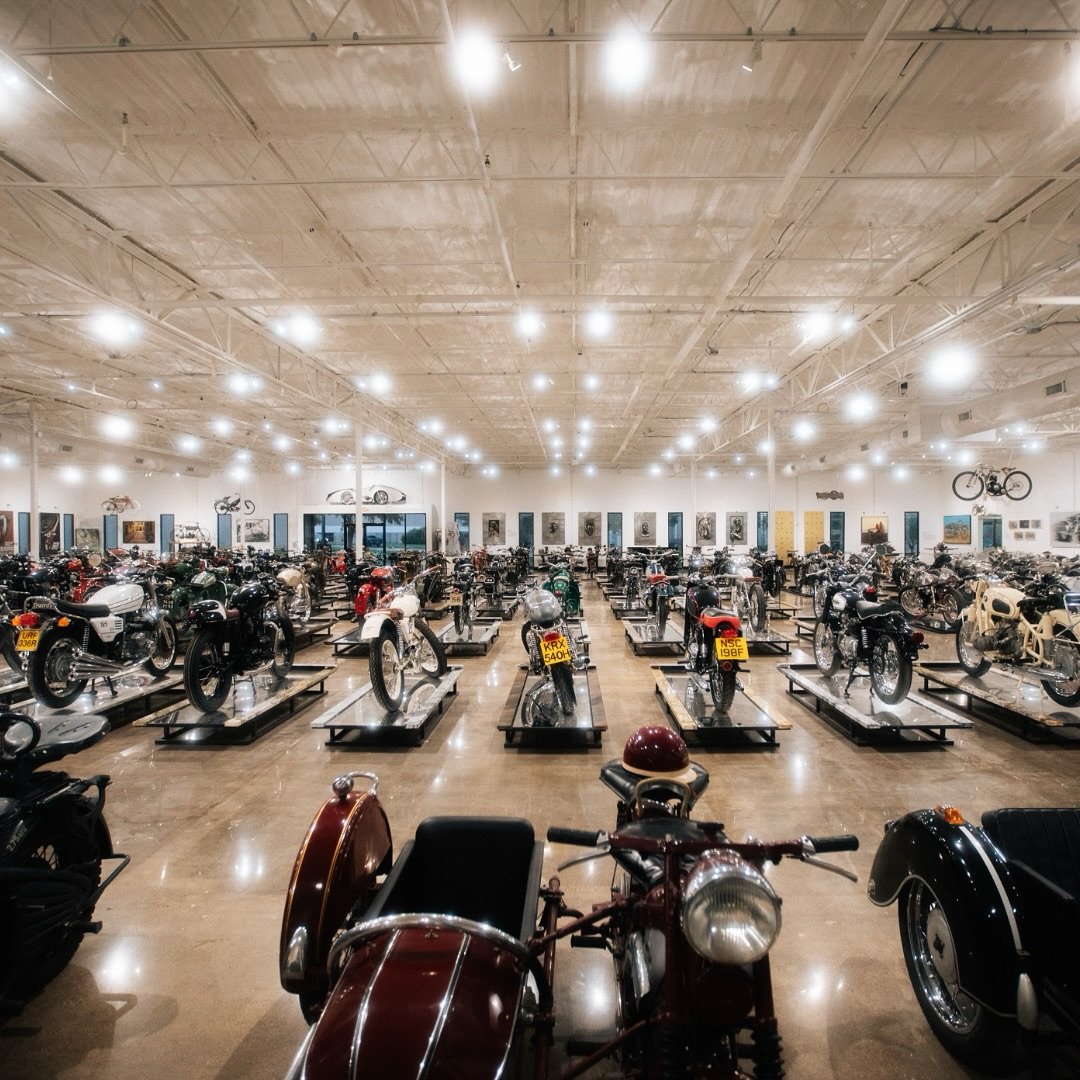
Haas Moto Museum
View Museum
Automobilia Motorcycle

Haas Moto Museum

Farmers Branch, United States

Search Results for: location

MODENA, Italy – Modena’s new Museo Casa Enzo Ferrari opened to the public on 10 March. It is a museum dedicated to one of Italy’s most celebrated legends, unquestionably one of the leading lights of the Twentieth Century,Enzo Ferrari, man, driver and carmaker: the history of car racing.

“If you can dream it, you can do it” is one of Enzo Ferrari’s best known sayings and certainly the one that best represents his philosophy, a life marked by passion and creativity, research and innovation, courage and challenge. A legend that hasmade Modena and Maranello the capitals of a dream come true.

“Le origini del Mito” covers the story and development of a quite unique area which gave birth to inspired technical ideas of universal importance through symbolic personalities, places and races (from the Modena Circuit to the Aerautodromo and the Mille Miglia; from Scaglietti, Fantuzzi, and Stanguellini to Maserati and Pagani, from De Tomaso to Alfa Romeo).

The new museum, built with an investment of some 18 million euros, stands on the ruins of the old house where Enzo Ferrari was born in 1898. The original dwelling has been preserved together with the workshop and it has been merged with the futuristic new gallery: a “bonnet” in yellow aluminium, the colour of the city of Modena, the colour chosen by Enzo Ferrari as the background for the Prancing Horse, the trademark of the company that bears his name.

The logo identifying the Museum combines in a single graphic sign the characteristic penstroke of Enzo Ferrari’s signature and the profile of the new Gallery whose design is inspired by the most classical of past racing cars. It goes without saying that the yellow of the pictogram is the same as the aluminium roof of the new building.

The competition for the design of the Museum began on 8 July 2004 and was contested by the most important international architecture studios. The “Open Hand” project, so called because like an open hand, the bonnet-shaped futuristic Gallery embraces the birthplace in a perfect union of tradition and modernity, was won by the Future Systems studio of London. The work to prepare the area involved in the project began in November 2007, the first stone, a sculpture by architect Jan Kaplicky, was laid on 20 April 2009.

The new Gallery combines the historical context with the most recent energy-saving technologies and the view recalls the aesthetic language and shapes of racing cars. The restoration and transformation of the birthplace into a Museum completes the cultural offering of the adjacent Gallery. The contemporary architecture which characterises the Museum carries the signature of architect Jan Kaplicky up to 2009. The interior design and artistic direction were the work of architect Andrea Morgante of Shiro Studio, co-designer of the Museum itself. Engineering, project management and works management were handled by Società Politecnica.

In the birthplace a permanent, high impact multimedia path covers the most significant events in Ferrari’s life, in the words of Leo Turrini who wrote the texts.

In the new Gallery, the protagonists of “Le origini del mito”, staged by Giovanni Perfetti, are the cars which are exhibited like works of art. The cars are all products of the great Italian brands and held in internationalcollections and museums of great prestige, some of them symbols of the life of Enzo Ferrari: the Alfa Romeo 40-60 of 1914, the Alfa Romeo RL Super Sport Mille Miglia of 1927 and the Alfa Romeo Bimotore of 1935. The history and glorious achievements of Modena carmaking are celebrated in historical documents andobjects selected by Adolfo Orsi, complete with previously unpublished audiovisuals.

Heading up the Museum areHonorary President Piero Ferrari, President Mauro Tedeschini and the Director Adriana Zini.

“This tribute to my father, who loved Modena profoundly, gives me immense pleasure”, Piero Ferrari says. “It provides an opportunity for anyone who wants to find out more about the man, his story and the link between the city and the world of engines. This new structure is perfectly complementary to the Ferrari Museum at Maranello, the other fundamental location in the life of my father”.

“The Museum is dedicated to the life of a character who contributed to making Italian culture famous all over the world, a path that tells the story of sports car racingthrough symbolic individuals, places and races”, says Mauro Tedeschini. “It is an importantinvestment for the city of Modena and for Emilia too, confirmed once again as the focal point of the life and passion of Italian motoring. With the MuseoCasa Enzo Ferrari we try to portray the imaginary bridge existing between past and future”. Tedeschini concludes: “The past as told by the old house where Enzo Ferrari was born in 1898, restored and preserved in its original structure, the future represented by the innovative architecture of the yellow aluminium “bonnet”, the city’s new emblem”.

“The Museum has all it takes to become a dynamic cultural container able to arouse interest not only among engine enthusiasts but more generally among the younger generations”, Adriana Zini points out. “Our hope is that it will become a new symbol of Modenese modernity and identity in Italy and the world, capable of becoming a centre of tourist attraction at international level. “

The total surface area of the Museum of about 5000 sq.m., comprises, in addition to the exhibition area, a lecture room with a digital documentation centre, a conference room, a film projection room, a store and a cafeteria. The museum will stay open 363 days a year. The documentation centre is named after Sergio Scaglietti, Enzo Ferrari’s coachbuilder, one of the characters whose creative flair contributed to thedevelopment of some of the most beautiful and world famous Ferraris. He passed away a few months ago.

The Founder Members and financial backers of the Fondazione Casa di Enzo Ferrari are the Municipality of Modena, the Province of Modena, the Modena Chamber of Commerce, Ferrari S.p.A. and the Automobile Club d’Italia.

Partners and supporters are the Ministry for the Cultural Heritage and Cultural Activities, the Fondazione Cassa di Risparmio di Modena, the Regione Emilia Romagna, the European Union (POR FESR 2007 -2013 of Regione Emilia- Romagna) in addition to the Banco S. Geminiano e S. Prospero, UniCredit Banca, Banca Popolare dell’Emilia Romagna. Martini Illuminazione and Mapei are respectively sponsors of the light engineering and the resin flooring of the museum complex.

From 11 March the Museum is open every day of the year from 9.30 am to 7 pm except for Christmas and New Year’s days.

More information: www.museocasaenzoferrari.it

Search Results for: location

MUNICH – Marc 20, 2013: The first ever Rolls-Royce Motor Cars exhibition at the BMW Museum in Munich has officially opened. The unique exhibition, entitled ‘Strive for Perfection’, celebrates the tenth year of the renaissance of the Rolls Royce marque under BMW Group ownership. The exhibition also commemorates yet another key milestone in the history of the Rolls-Royce brand – the 150th anniversary of the birth of Sir Henry Royce.

The displays tell the story of the world’s leading super-luxury goods manufacturer in chronological detail; from the meeting of the company’s founding fathers, Sir Henry Royce and the Honourable Charles Stewart Rolls in 1904, through to the present day.

Situated in the landmark BMW Museum bowl and covering more than 1,000 square metres over five floors, the exhibition includes 15 original Rolls Royce motor cars dating from 1907 to 2012. The collection includes the famous Rolls-Royce 10EX, one of the most significant experimental cars in the world, built in 1926 to demonstrate the performance potential of the ‘New Phantom’. Sir Henry Royce engineered and drove 10EX himself in his relentless pursuit of automotive perfection.

The historic cars are complemented by beautiful descriptive displays, with themes including coachbuilding, craftmanship, Bespoke design, engineering and advertising. The narrative includes historic displays of the famous Spirit of Ecstasy hood ornament and the ‘Pantheon’ radiator grille, both unmistakable icons associated with Rolls-Royce motor cars.

The exhibition is accompanied by displays of timeless craftsmanship from other British luxury manufacturers, including men’s and women’s fashion, leather goods, time pieces, shoes, silver and glass ware.

“This outstanding and historic exhibition proudly celebrates the tenth anniversary of the renaissance of Rolls-Royce Motor Cars under BMW Group ownership”, said Torsten Müller-Ötvös, Chief Executive Officer. “Our contemporary motor cars present a unique blend of German expertise and technology and outstanding British craftsmanship and design. It is therefore appropriate that this key moment in the story of this Great British manufacturing success story is told in the BMW Museum, an iconic location which is both the ‘soul and the memory’ of the BMW Group.”

Search Results for: location

We visited Winfried A. Seidel’s excellent museum, which is situated in Ladenburg, near Mannheim in August, 2010.

Mr Seidel told us that the museum was originally opened in 1984 in a much smaller place, then moved to another location in the 1990s. It was a generous donation from Mercedes-Benz which enabled him to take over and refurbish the old workshops of C. Benz Söhne.

C. Benz Söhne was set up by Carl Benz and his sons in 1905 – two years after Carl Benz left his own company. C. Benz Söhne only built a couple hundred cars until 1926. Today the sole surviving C. Benz Söhne resides in Seidel’s museum.

This is a small and rather accessible collection. Staff is absolutely friendly and the place is roomy, you can see all cars quite easily. On one of the walls there’s the original patent, which shows the “Patent Motorwagen”. There are a lot of early Benz cars, including a replica of Benz No3 – which Bertha Benz used for her epic trip in 1888. In addition to Benz, C Benz Söhne and Mercedes-Benz cars there are a few others, belonging to Seidel and Seidel’s friends. Additionally there’s a section devoted to motor racing in Germany, which shows everything from a 1920s Amilcar to 1970s special-racers. Elsewhere you can see classic bikes, bicycles too.

You can see more photos in our flickr gallery

Museum entry in the database

Search Results for: location

The Museum of Heavyweights (Museum du Poids Lourd) was set up by a group of local enthusiasts in 1982. After many twists and turns the collection moved to its current location in 2005.

Montrichard lies near a lot of Loire Castles, but this small city doesn’t have a castle of its own, just an ancient fortress. If you come from Blois, you can’t miss the sign of the museum next to the road.

It’s not a professional museum, but a collection set up by enthusiasts. This in no way implies any negative connotations. There are a lot of interesting trucks and lorries. Most of them are restored. Focus is naturally on French brands (Unic, Citroen, Berliet, FAR and many others) but the centerpiece is an American Seagrave fire truck.

If you are in the middle of a castle visiting spree (just as we were back in August :)) this is a nice détour, which you can check out in about 30 minutes.

More photos are available in our flickr gallery

  • Directory entry
  • Search Results for: location

    Valencay is home to one of the most elegant and exquisite castles in the Loire Valley. It was used by Napoleon’s foreign minister, Talleyrand in the early 19th century.

    The automobile museum is just a few steps from the castle. It was set up in the 1960s by the Guignard brothers and moved to its current location in 1981.

    There are about 50 cars on an area of 1600 sqm. It looked a bit crowded, but there were several rather interesting vehicles. Most of the collection focuses on French automotive history. Highlights include a 1906 Turcat-Mery, two Delaunay-Belleville luxury cars, a Bugatti 57 Stelvio, two LaLicorne cars etc.

    More photos are available in our flickr gallery

  • Directory entry
  • Scroll to Top